

1. Why People Search “Proud for You vs Proud of You”
Texting culture in 2026 has evolved to include subtle nuances in word choice, tone, and context. One of the most common areas of confusion is knowing when to say “proud for you” versus “proud of you.” Many users search this exact phrase because, on the surface, both expressions seem interchangeable, but their meanings, usage, and emotional impact differ significantly.
Understanding the difference is essential, especially in digital communication, where tone is harder to convey than in face-to-face conversation. Misusing these phrases can lead to unintended awkwardness, misinterpretation, or even perceived rudeness.
By the end of this article, you will have a clear understanding of:
- The literal and implied meaning of both phrases
- When and where each phrase is appropriate
- How modern texting habits influence their usage
- Examples across casual, professional, and online contexts
2. What Does “Proud for You vs Proud of You” Mean in Text?
Proud of You
Literal meaning: Feeling personal pride in someone else’s achievement.
Example: “I’m so proud of you for finishing your first marathon.”
Implied meaning: The speaker acknowledges the effort and success as directly worthy of admiration. It expresses a deep sense of personal investment and positive recognition.
Common misconception: Some people assume it implies ownership or superiority, but it primarily communicates admiration without claiming involvement in the achievement.
Proud for You
Literal meaning: Feeling happiness or approval for someone else’s accomplishment.
Example: “I’m proud for you that you got the promotion!”
Implied meaning: The focus is on supporting the person’s success rather than feeling personal pride. It emphasizes empathy and encouragement.
When it does not mean what people assume: Using “proud for you” is not equivalent to taking credit; it is about sharing joy without claiming personal attachment.
3. Is “Proud for You vs Proud of You” a Slang, Typo, or Intentional Usage?
In digital communication, particularly texting and instant messaging:
- Proud of you is standard English, widely accepted in professional and casual contexts.
- Proud for you is less traditional but has gained traction online, especially in supportive or empathetic messaging.
Influences:
- Slang: Neither is slang, but “proud for you” may be considered informal.
- Typing behavior: Autocorrect and predictive text sometimes nudge users toward “for” instead of “of,” increasing its visibility.
- Intentional style: Younger generations often use “proud for you” to convey emotional closeness or digital warmth.
How to tell the difference using context: Look at tone, punctuation, and the relationship. “Proud of you!” is formal and affirming; “proud for you 😄” is informal and empathetic.
4. Origin and Evolution of “Proud for You vs Proud of You” in Digital Communication
Early Chat & SMS Influence
In the 2000s and early 2010s, messaging platforms like MSN, AIM, and SMS encouraged short, concise phrases. People often adapted standard English expressions for brevity, leading to subtle shifts in preposition usage.
Social Media & Instant Messaging Evolution
Platforms like Instagram, WhatsApp, and TikTok accelerated casual expressions. “Proud for you” became common in captions, comments, and replies, especially when acknowledging friends’ accomplishments.
Influence of Younger Generations
Gen Z and Alpha generations prioritize empathy, inclusivity, and positivity in online communication. “Proud for you” aligns with this emotional tone, signaling support without formality.
Persistence in 2026
Even as language norms evolve, both expressions remain relevant because they serve distinct emotional and social functions in digital communication.
5. Real-World Usage Scenarios (Detailed Examples)
a) Casual Friend Conversations
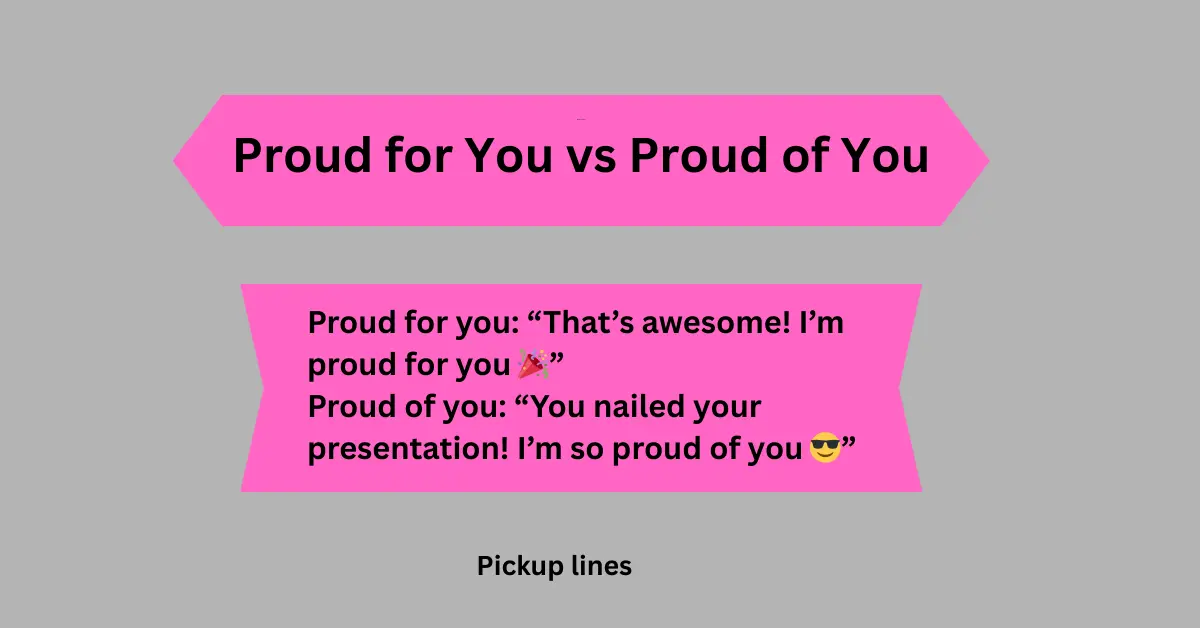
Proud of you: “You nailed your presentation! I’m so proud of you 😎”
Proud for you: “That’s awesome! I’m proud for you 🎉”
- Tone shift: “of you” emphasizes admiration; “for you” emphasizes support.
b) Workplace & Professional Chat
Formal team chat:
- “Congratulations on closing the deal. I’m proud of you and the team’s efforts.”
Informal chat with colleagues:
- “Wow, you got promoted! Proud for you 😁”
- Tone shift: Formal contexts favor “of you” for clarity and respect; informal channels allow empathetic, supportive language like “for you.”
c) Social Media, Gaming, and Online Communities
Gaming: “You finally beat the boss level! Proud of you 💪”
Instagram comments: “So happy for your achievement! Proud for you ❤️”
- Tone shift: Casual platforms often prefer “proud for you” to emphasize community support and shared happiness.
6. Emotional Tone and Intent Behind “Proud for You vs Proud of You”
- Friendly: “proud of you” – admiration, validation
- Neutral: “proud for you” – empathetic encouragement
- Awkward or careless: Using the wrong preposition in professional settings can seem informal or incorrect
Punctuation and Emojis
- “Proud of you!” → Strong affirmation
- “Proud for you 😅” → Warm, playful, or slightly informal
- “Proud of you 😐” → Neutral, may imply detached acknowledgment
7. Cultural and Regional Differences in Usage
- Native English speakers: Generally prefer “proud of you” in formal writing; “proud for you” is more informal and digital-native.
- Non-native speakers: May overuse “proud for you” due to literal translation from other languages.
- Regional habits: North America leans toward “proud of you” in mixed-age contexts; UK and Australia show higher flexibility online.
- Cross-platform adoption: Social media compresses linguistic norms, making “proud for you” widely understandable across regions.
8. “Proud for You vs Proud of You” Compared With Similar Texting Terms
| Phrase | Meaning | Tone | Formality | Best Use Cases |
|---|---|---|---|---|
| Proud of you | Admiration of achievement | Affirming | High | Work, formal chats, family |
| Proud for you | Supportive happiness for achievement | Empathetic | Medium | Casual texts, social media |
| Happy for you | Emotional joy | Positive | Medium | Friend support, emojis |
| Congrats | Acknowledgment, celebratory | Neutral/cheerful | Medium | Any casual/professional context |
| Kudos | Praise, often informal | Neutral | Low | Informal chats, online boards |
Semantic/LSI terms: recognition, admiration, support, encouragement, celebration, achievement.
9. Common Misunderstandings and Mistakes
- Misinterpretation: “proud for you” can be misread as condescending in formal contexts.
- Autocorrect errors: Predictive text may swap “of” and “for” incorrectly.
- Overuse problems: Excessive praise can dilute sincerity.
- Avoiding confusion: Match expression with context, use punctuation, and consider emojis for tone clarity.
10. Is “Proud for You vs Proud of You” Polite, Rude, or Unprofessional?
- Relationship-based: Close friends and family → both are appropriate.
- Professional context: Prefer “proud of you” for formal messaging; “proud for you” can be acceptable in informal team chats.
- Professional etiquette: Avoid “proud for you” in official emails or LinkedIn comments where traditional grammar is expected.
11. Expert Linguistic Insight (Text Language in 2026)
- Digital slang evolves through efficiency: Prepositions may shift for rhythm or empathy.
- Abbreviations and variations persist: “proud for you” is part of a larger trend where emotional nuance guides word choice over grammar rules.
- Efficiency vs grammar: Digital language prioritizes meaning transmission, emotional resonance, and tone over strict adherence to rules.
12. How and When You Should Use “Proud for You vs Proud of You”
Do’s
- Use proud of you for formal, professional, or mixed-audience communications.
- Use proud for you to express warmth, empathy, or casual support.
- Pair with emojis or punctuation to clarify tone.
Don’ts
- Avoid proud for you in official emails, academic texts, or highly formal correspondence.
- Don’t overuse either phrase in rapid succession; alternate with “congrats” or “well done” for variety.
Safer alternatives
- “I admire your effort.”
- “Congratulations, you did amazing!”
- “I’m happy for your success.”
13. FAQs About “Proud for You vs Proud of You”
1. Can I use “proud for you” professionally?
Yes, but only in informal team chats or casual emails; avoid in official correspondence.
2. Is “proud of you” more correct than “proud for you”?
Grammatically, yes. “Proud of you” is standard English, while “proud for you” is accepted in casual contexts.
3. Does “proud for you” sound condescending?
It can if used in formal settings; context and tone are key.
4. Are emojis necessary?
Not necessary, but they enhance clarity in digital communication.
5. Can non-native speakers use “proud for you”?
Yes, especially in casual texting, but be mindful in formal writing.
6. What is the difference in emotional tone?
“Of you” = admiration; “for you” = supportive empathy.
7. Is one phrase more modern than the other?
“Proud for you” is increasingly common in social media and messaging platforms.
8. Can both be used interchangeably?
Rarely; subtle differences in tone and context make them non-interchangeable in nuanced communication.
14. Final Summary and Key Takeaways
- Proud of you = admiration and recognition; safe in professional and formal contexts.
- Proud for you = empathetic support; better suited for casual, social, or digital-native conversations.
- Tone, punctuation, and context significantly affect interpretation.
- Misuse can lead to unintended awkwardness or perceived rudeness.
- Use emojis and alternatives to reinforce emotional intent.
By understanding these nuances, you can confidently express support, admiration, and empathy in any digital conversation in 2026 and beyond.