

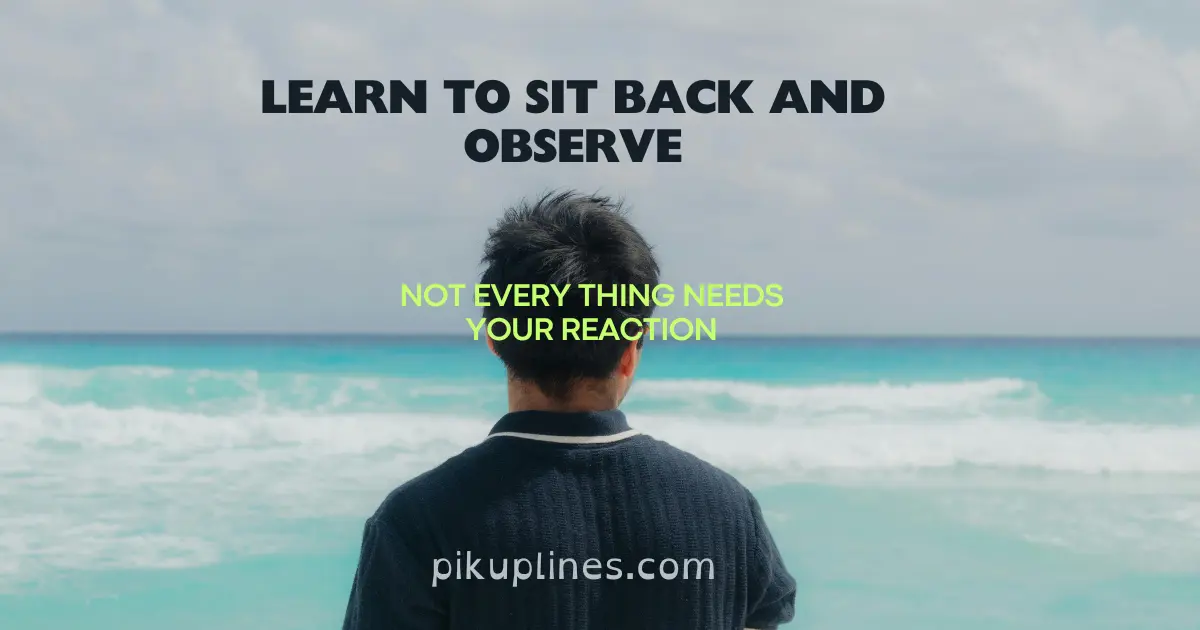
In today’s fast-paced world, people often feel pressured to respond to everything around them. Whether it’s in conversations, on social media, at work, or even within family and friends, we feel the need to react immediately. But reacting to everything can be exhausting. Learning to sit back and observe is a powerful skill that can improve your life, mental health, and decision-making. It teaches patience, understanding, and control over your emotions.
Observing before reacting is more than just staying silent. It is about paying attention, understanding the situation fully, and responding wisely only when necessary. When you learn to sit back and observe, you give yourself the power to act thoughtfully rather than impulsively. It’s a skill that many successful people use, often without realizing it.
Why You Don’t Need to React to Everything
Not every action, word, or situation deserves your attention. Reacting to every small thing can lead to stress, misunderstandings, and even conflicts. For example, imagine someone posts a negative comment on social media about your opinion. If you respond immediately, you might say something harsh or defensive that you regret later. But if you take a step back and observe, you can understand why the person wrote it, whether it deserves a reply, or if it’s better to ignore it.
In personal life, observing can prevent unnecessary arguments. Let’s say a colleague is acting impatient or rude at work. Reacting in anger could damage your relationship. But if you pause and watch their behavior, you may notice they are under stress or dealing with a personal issue. Observing allows you to respond calmly or even offer help, which shows maturity and control.
How Observation Helps in Communication
Observation is not just about staying quiet; it’s about understanding people and situations better. When you listen more and talk less, you pick up details that others may miss. For instance, during a conversation, instead of immediately reacting to someone’s statement, notice their tone, body language, and emotions. Are they frustrated, excited, or nervous? Observing these cues gives you deeper insight into their perspective and helps you respond in a way that is respectful and effective.
Example: If a friend is upset and complaining about a problem, instead of saying, “Just get over it,” you observe their feelings and respond, “I understand this is hard for you. How can I help?” Observation transforms your responses into meaningful and supportive actions.
Benefits of Sitting Back and Observing
1. Better Decision Making
When you react immediately, your decisions are often emotional and rushed. Sitting back allows you time to gather information, analyze options, and choose the best course of action. For example, if you receive a work-related challenge, observing first can help you understand the problem fully before making a solution.
2. Reduced Stress
Constantly reacting to every small trigger creates tension and anxiety. Observing teaches patience. You notice situations without letting them disturb your peace. Imagine watching a heated discussion without getting involved—you remain calm, while others may be caught in conflict.
3. Improved Relationships
People appreciate someone who listens and understands rather than someone who always reacts. Observing shows empathy. It helps in family, friendships, and professional relationships. For example, when a partner expresses frustration, you notice their emotions without interrupting, and this builds trust.
4. Increased Self-Control
Observation develops self-discipline. You learn to pause before responding. Over time, this reduces regretful words and impulsive reactions. For instance, avoiding an angry text reply until you calm down can prevent a lot of misunderstandings.
Practical Ways to Learn to Sit Back and Observe
1. Practice Mindfulness
Mindfulness is the art of being present in the moment without judgment. Start by paying attention to your surroundings, your thoughts, and your feelings. Simple exercises, like focusing on your breathing or noticing the sounds around you, help train your mind to observe instead of react.
Example: While walking, instead of thinking about work or responding to messages, notice the colors, sounds, and movements around you. This strengthens your ability to observe calmly.
2. Count Before You Speak
When you feel the urge to respond immediately, count to five in your mind before saying anything. This pause gives your brain a moment to analyze whether a reaction is necessary.
Example: During a family argument, instead of snapping back, count slowly. You might realize that responding isn’t needed, or that a calmer reply works better.
3. Ask Questions Instead of Reacting
Observation often involves curiosity. When someone says or does something unexpected, ask questions instead of reacting instantly.
Example: If a coworker criticizes your work, instead of defending yourself immediately, ask, “Can you explain which part needs improvement?” This not only gives you clarity but shows professionalism.
4. Keep a Journal
Writing down your observations daily can improve your awareness. Note situations where you felt the urge to react, how you handled them, and what you learned. Over time, you’ll notice patterns and become better at observing calmly.
5. Limit Social Media Reactions
Social media encourages instant reactions. Instead of commenting immediately on posts, take time to read and think. Decide whether your response adds value or if it’s better to stay silent.
Example: You see a post that annoys you. Instead of replying with anger, observe why it triggers you. Maybe it’s a misunderstanding or your own bias. Respond only if it’s meaningful.
Observation in Everyday Life
Observation is not limited to big decisions; it applies to small daily actions as well.
- At Work: Notice team dynamics before giving feedback. Understand who prefers direct communication and who needs encouragement.
- At Home: Watch your children’s behavior before reacting to tantrums. Understanding the reason behind their actions helps you respond better.
- In Social Settings: Observe body language. Sometimes, silence says more than words. You can understand moods, tensions, and intentions by noticing subtle signs.
Real-Life Examples
- Business Leaders: Many successful leaders, like Warren Buffett, are known for observing carefully before making decisions. Buffett often studies markets and waits patiently rather than reacting to short-term trends.
- Teachers: Experienced teachers watch students’ behavior to understand their learning styles before giving instructions. Reacting immediately may confuse students, but observing first allows for better guidance.
- Personal Relationships: Imagine a friend lashes out during a stressful day. Reacting angrily worsens the situation. Observing, understanding, and then responding calmly often solves conflicts faster.
Common Mistakes to Avoid
- Assuming Silence Means Weakness: Many think if you don’t react, you are passive. In reality, observing before reacting is a sign of strength and maturity.
- Overthinking: While observing, avoid overanalyzing every small detail. Balance awareness with action.
- Ignoring Important Situations: Observing doesn’t mean ignoring serious problems. Learn to distinguish between trivial and important matters.
Tips to Make Observation a Habit
- Start with one situation per day where you pause before reacting.
- Notice your emotions without judgment. Ask yourself why you feel this way.
- Reflect on your observations at the end of the day. Did waiting before reacting help?
- Gradually expand this habit to more situations, from small irritations to bigger conflicts.
Conclusion
Learning to sit back and observe is a skill that can transform your life. It helps you make better decisions, reduce stress, improve relationships, and increase self-control. Not everything deserves a reaction, and not every situation requires your immediate involvement. By observing first, you gain understanding, clarity, and patience.
Start with small steps. Practice mindfulness, count before responding, ask questions, and reflect on your day. Over time, observing becomes second nature. You will notice a calmer mind, better relationships, and a life guided by wisdom rather than impulse. Remember, sometimes the most powerful action is doing nothing at all and simply observing.
Sitting back and observing doesn’t make you passive; it makes you wise.