

1.Why People Search “Make Do or Make Due”
The phrase “make do or make due” is one of the most frequently confused word pairs in modern English—especially in texting, casual writing, and online conversations. Millions of people search this phrase every year because they encounter both versions online and aren’t sure which one is correct.
In 2026, this confusion has only increased.
Why?
Because modern communication is fast, informal, and heavily influenced by:
- Text messaging
- Social media captions
- Voice-to-text autocorrect
- Non-native English usage
- AI-assisted writing
People often see “make due” written by others and assume it’s acceptable—or even correct. Others hear the phrase spoken aloud and write what sounds right. This creates uncertainty for students, professionals, ESL speakers, and content creators alike.
This article will clearly explain:
- What “make do” actually means
- Why “make due” is usually wrong
- Where the confusion comes from
- How the phrase is used in texting, work chat, and online communities
- When (if ever) “make due” is acceptable
- How to use the phrase correctly and confidently in 2026 and beyond
By the end, you’ll never second-guess this phrase again.
2. What Does “Make Do or Make Due” Mean in Text?
The correct phrase: Make do
“Make do” means:
To manage, survive, or continue with what is available, even if it is not ideal.
It implies adaptation, compromise, and acceptance of limitation.
Literal meaning:
To make something sufficient despite lack or inconvenience.
Implied meaning:
“I don’t have the best option, but I’ll manage.”
Example meanings in text:
- Accepting limited resources
- Coping with a situation
- Settling without complaint
Examples:
- “We don’t have enough chairs, but we’ll make do.”
- “The internet is slow today—I’ll make do.”
- “I forgot my charger, but I can make do until evening.”
When it does NOT mean what people assume
“Make do” does not mean:
- To complete something fully
- To do something correctly
- To pay or settle a debt
This misunderstanding is what leads people to incorrectly write “make due.”
3. Is “Make Do or Make Due” a Slang, Typo, or Intentional Usage?
Is “make due” slang?
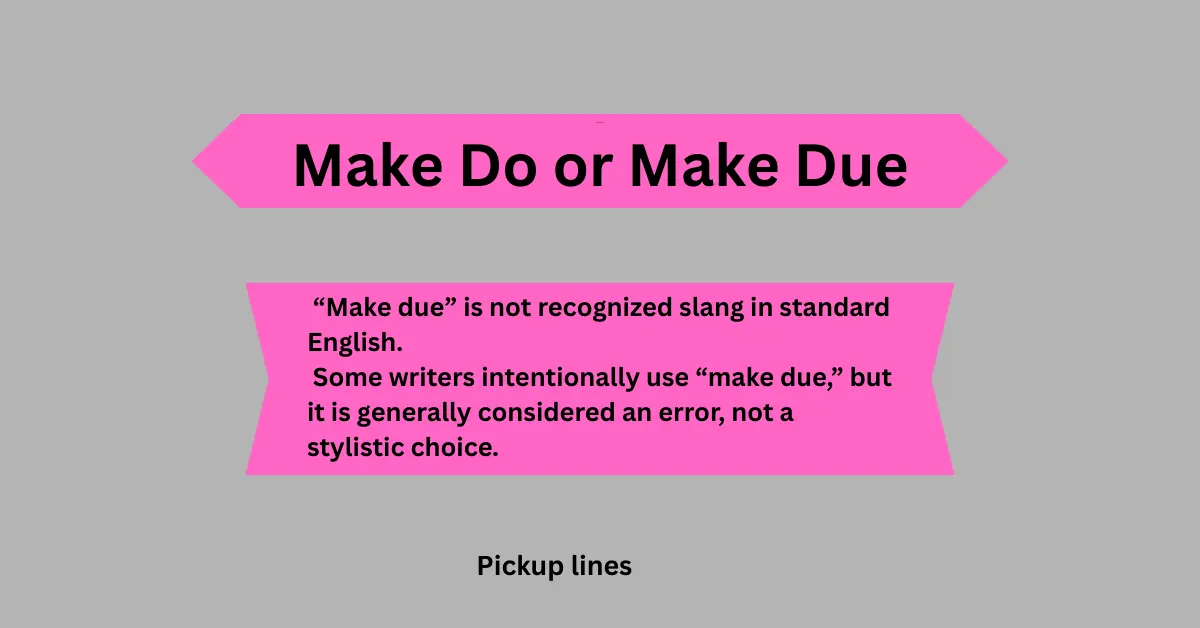
No. “Make due” is not recognized slang in standard English.
Why people type “make due”
There are three main reasons:
1. Phonetic confusion
“Do” and “due” sound identical in spoken English. Many writers spell what they hear.
2. Autocorrect influence
Modern keyboards often suggest “due” because it’s a more common standalone word.
3. Logical misinterpretation
People assume “due” relates to:
- Something owed
- Something required
- Something expected
This feels logical, but it’s linguistically incorrect.
Is it ever intentional?
Rarely. Some writers intentionally use “make due,” but it is generally considered an error, not a stylistic choice.
How to tell the difference using context
If the sentence means coping with less, the correct phrase is make do.
4. Origin and Evolution of “Make Do or Make Due” in Digital Communication
Historical origin of “make do”
The phrase “make do” dates back to at least the 18th century, commonly used in British English during times of scarcity.
Early SMS and chat influence
In early texting (2000s):
- Grammar was sacrificed for speed
- Spellcheck was weak
- Homophones caused frequent errors
“Make due” quietly spread through repetition.
Social media acceleration
Platforms like:
- Twitter/X
- TikTok captions
normalized incorrect usage through visibility rather than correctness.
Younger generations and usage
Gen Z and Gen Alpha:
- Often learn phrases visually, not formally
- Prioritize meaning over grammar
- Repeat what they see most
Why it still exists in 2026
Because:
- It sounds right
- It’s rarely corrected
- Many platforms reward speed over precision
But professional and authoritative English still strongly favors make do.
5. Real-World Usage Scenarios (Detailed Examples)
a) Casual Friend Conversations
Tone: Relaxed, forgiving
Examples:
- “No snacks left, we’ll make do 😂”
- “Camera’s broken but we’ll make do for now”
- ❌ “We’ll make due somehow” (common but incorrect)
In casual chat, errors are often ignored—but they’re still errors.
b) Workplace & Professional Chat (Formal vs Informal Teams)
Informal team chat:
- “The budget’s tight, but we’ll make do.”
Formal writing or emails:
- “Given current constraints, we will make do with existing resources.”
Using “make due” in professional settings reduces credibility and signals weak language control.
c) Social Media, Gaming, and Online Communities
Gaming chat:
- “No healer? Guess we make do.”
Social media captions:
- “It’s not perfect, but we make do 💪”
Online spaces spread incorrect versions fast—but accuracy still matters for creators and brands.
6. Emotional Tone and Intent Behind “Make Do or Make Due”
Emotional tone of “make do”
- Resilient
- Practical
- Mildly resigned
- Sometimes humorous
How punctuation and emojis change meaning
- “We’ll make do.” → neutral acceptance
- “We’ll make do!” → positive resilience
- “We’ll make do 🙃” → reluctant acceptance
When it feels warm vs careless
- Warm: Used with humor or empathy
- Careless: Used incorrectly as “make due” in serious contexts
7. Cultural and Regional Differences in Usage
Native vs non-native speakers
ESL speakers often struggle because:
- “Due” is taught early (due date, due payment)
- “Do” feels grammatically weak
Regional habits
- UK English strongly favors make do
- American English sees more make due errors online
- South Asian English shows higher phonetic spelling influence
Cross-platform adoption
Once an error becomes common on one platform, it spreads globally.
8. “Make Do or Make Due” Compared With Similar Texting Terms
| Phrase | Meaning | Tone | Formality | Best Use Case |
|---|---|---|---|---|
| Make do | Manage with less | Neutral | Medium | Everyday use |
| Get by | Survive minimally | Casual | Low | Conversation |
| Settle for | Accept unwillingly | Neutral | Medium | Decisions |
| Cope with | Handle difficulty | Formal | High | Professional |
| Make due | ❌ Incorrect | — | — | Avoid |
9. Common Misunderstandings and Mistakes
Frequent errors:
- Writing “make due” in essays
- Using it in business emails
- Assuming it relates to deadlines
Autocorrect problems
Phones often auto-replace do with due.
Overuse issues
Even “make do” can feel repetitive—variety matters.
How to avoid confusion
Ask yourself:
“Am I managing with what I have?”
If yes → make do
10. Is “Make Do or Make Due” Polite, Rude, or Unprofessional?
Relationship-based analysis
- Friends: Fine
- Family: Fine
- Colleagues: Acceptable
- Clients: Use carefully
Professional etiquette
“Make do” is neutral but can imply limitation. In formal settings, alternatives may sound more proactive.
11. Expert Linguistic Insight (Text Language in 2026)
Digital language evolves because:
- Speed > precision
- Meaning > form
- Visibility > correctness
However, standard English still governs credibility.
Abbreviations and errors persist because they reduce cognitive effort—but clarity still wins in professional and search-based environments.
12. How and When You Should Use “Make Do or Make Due”
Do:
✔ Use make do when resources are limited
✔ Use it in speech, text, and writing
✔ Pair with context for clarity
Don’t:
❌ Use “make due”
❌ Use it in formal proposals casually
❌ Assume autocorrect is right
Safer alternatives:
- “Manage with”
- “Work with what we have”
- “Proceed with current resources”
13. FAQs About “Make Do or Make Due”
1: Is “make due” ever correct?
No. In standard English, it is incorrect.
2: Why do so many people say “make due”?
Because it sounds the same and autocorrect reinforces it.
3: Is “make do” informal?
It’s neutral—acceptable in both casual and professional contexts.
4: Can I use “make do” in an email?
Yes, but ensure the tone fits the situation.
5: Is this a British or American phrase?
Both, but British English historically used it more.
6: Will Google consider “make due” wrong?
Yes. Authoritative sources favor “make do.”
7: Is it okay in texting to use “make due”?
People do—but it’s still incorrect.
14. Final Summary and Key Takeaways
- “Make do” is the correct phrase
- It means managing with what you have
- “Make due” is a widespread but incorrect spelling
- Digital communication and autocorrect fuel the confusion
- Correct usage improves clarity, credibility, and professionalism
- In 2026, accuracy still matters—especially in search, work, and published content
If you remember one thing:
When you’re coping, adapting, or settling—you make do.