

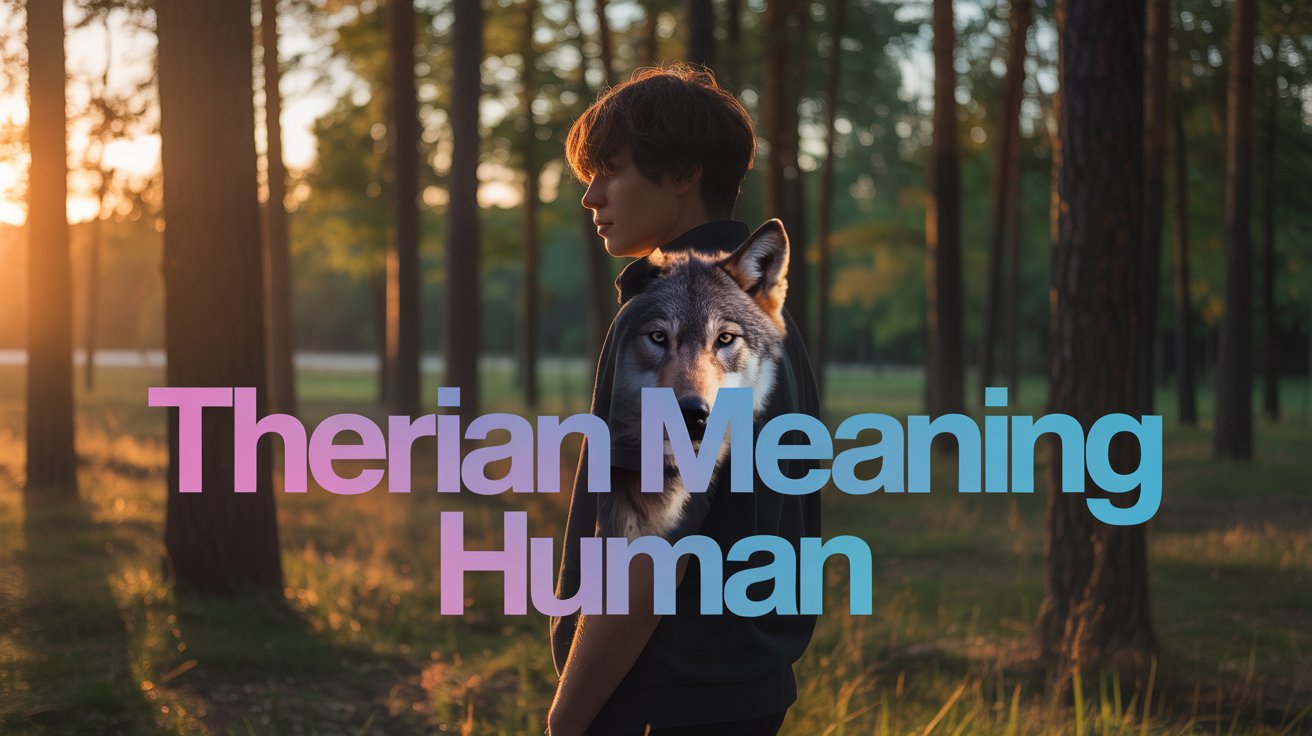
If you recently came across the phrase “therian meaning human,” you’re not alone. Curiosity around the term has exploded online, especially across communities on platforms like TikTok and Instagram. Many people see videos of individuals saying they are therians and immediately wonder:
Does this mean someone believes they are literally an animal instead of a human?
The short answer is no.
The term is often misunderstood. In reality, a therian is a human who feels a deep psychological or spiritual connection with a particular animal. They fully understand they are biologically human, yet they experience a strong inner identification with an animal identity.
This concept comes from a broader idea known as Therianthropy, which historically described humans spiritually connected with animals.
People search for “therian meaning human” because the internet often oversimplifies the topic. Some assume it’s a joke. Others think it’s a mental condition. Many simply want to understand a cultural phenomenon spreading through online youth communities.
This guide breaks it down clearly, with real examples, cultural context, and psychological insight.
Therian Meaning Human – Quick Meaning
A therian is a human who internally identifies with a specific animal on a psychological or spiritual level.
Important points:
- A therian knows they are physically human
- The connection is identity-based or emotional
- It often relates to instincts, personality traits, or inner self-perception
Simple explanation:
Therian meaning human:
A human being who feels their inner identity strongly aligns with an animal.
Example statements people might say:
“I know I’m human, but my inner identity feels wolf-like.”
“Being a therian means I connect deeply with fox instincts.”
“It’s more about identity and feeling than pretending.”
Origin & Background
The idea behind therians didn’t begin on social media. It traces back much further.
Historically, cultures around the world told stories about humans transforming into animals or sharing spirits with them. Ancient mythologies featured wolf warriors, animal spirits, and shape-shifting legends.
Over time, the modern internet gave people a place to discuss similar feelings openly.
The modern therian community started forming in online forums during the 1990s. Early discussion groups allowed individuals to share experiences of feeling connected to animals in ways they couldn’t easily explain.
Social media later amplified the concept.
Platforms such as TikTok helped spread therian identity awareness through:
- storytelling videos
- personal experiences
- educational explanations
Young users began posting videos about their “theriotype,” which means the animal they identify with.
Common examples include:
- wolves
- foxes
- cats
- birds
- deer
Today the term has become a cultural conversation topic rather than just a niche internet identity.
Real-Life Conversations
Here are realistic examples of how the topic appears in everyday conversations.
WhatsApp Chat
Person A:
“I saw someone say they’re a therian. What does that even mean?”
Person B:
“It means they’re human but feel a deep connection to a specific animal identity.”
Person A:
“So they don’t think they’re literally an animal?”
Person B:
“No, it’s more about identity and instincts.”
Instagram DMs
Person A:
“Your wolf mask videos are cool. Are you a therian?”
Person B:
“Yeah, I identify with wolves spiritually.”
Person A:
“That’s interesting. I always thought it was just cosplay.”
Person B:
“A lot of people think that at first.”
TikTok Comments
Commenter 1:
“Wait… do therians believe they’re animals?”
Commenter 2:
“No. They know they’re human. It’s more about identity and connection.”
Commenter 3:
“That makes way more sense now.”
Text Messages
Friend 1:
“My cousin says she’s a fox therian.”
Friend 2:
“I think it means she feels connected to fox traits.”
Friend 1:
“Like personality?”
Friend 2:
“Yeah, instincts and identity.”
Emotional & Psychological Meaning
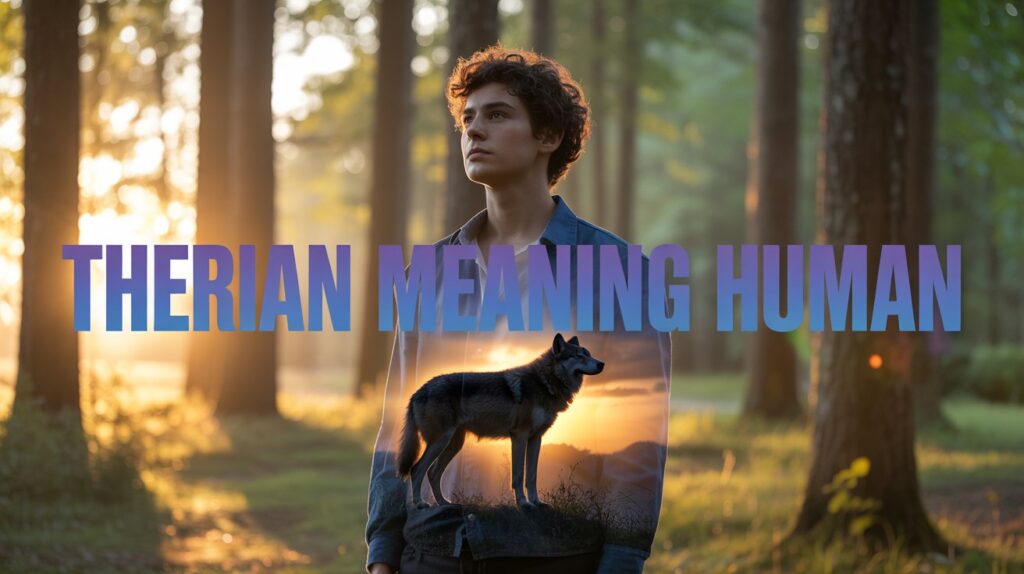
At its core, therian identity is often about self-understanding.
Many therians describe a feeling that certain animal traits match their inner personality:
- independence
- loyalty
- curiosity
- instinctive behavior
For example, someone who identifies with wolves may feel deeply connected to pack loyalty and protective instincts.
Psychologically, identity exploration is common during adolescence and young adulthood. People experiment with labels that help them describe their inner experiences.
A simple scenario illustrates this.
Imagine someone who always felt unusually calm in forests, strongly protective of friends, and drawn to wolf symbolism. When they discover the therian concept online, they suddenly find language that explains feelings they struggled to describe before.
For them, the identity provides personal meaning and self-expression, not literal transformation.
Usage in Different Contexts
Social Media
Online communities use the term frequently. People may post:
- identity stories
- artwork
- therian masks or gear
- nature experiences
Social platforms allow users to share identity without judgment.
Friends & Relationships
Among friends, the term often appears in casual discussions about identity.
Example:
“I recently discovered I might be a therian.”
Supportive friends usually respond with curiosity rather than criticism.
Work or Professional Settings
In professional environments, the term is rarely discussed.
Most people separate personal identity exploration from workplace communication.
Casual vs Serious Tone
The phrase can appear in two ways:
Casual:
Online discussions, memes, curiosity.
Serious:
Personal identity explanation within communities.
Tone matters when interpreting the meaning.
When NOT to Use It
Although the term is widely discussed online, there are situations where using it can cause confusion.
Avoid using it in:
- professional meetings
- formal academic writing (without explanation)
- sensitive cultural discussions
Some people may misunderstand the term and assume it means believing one is literally an animal.
Respectful context is important.
Common Misunderstandings
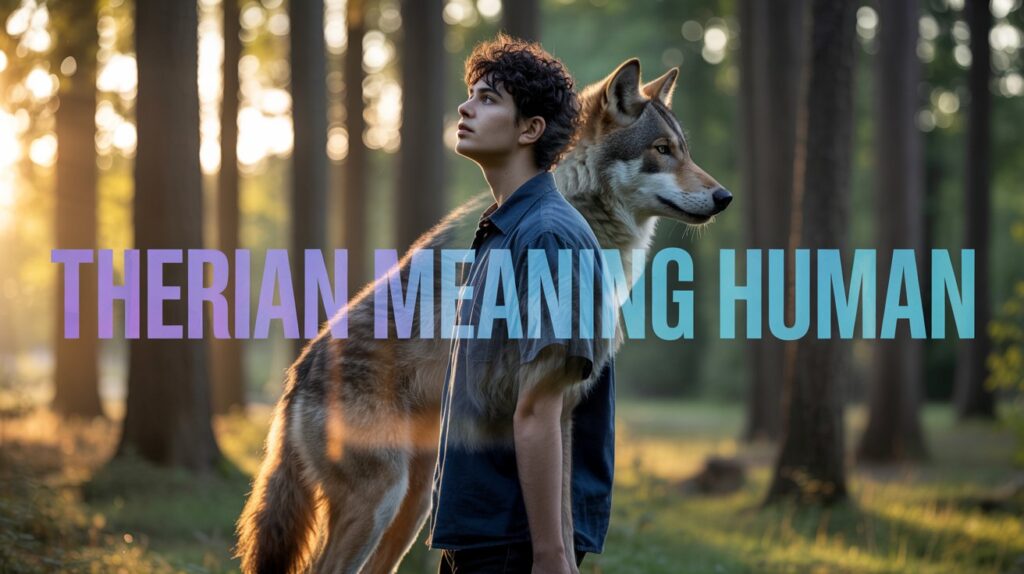
Several myths circulate online about therians.
Misunderstanding 1: They think they are physically animals
Reality:
Therians fully understand they are human.
Misunderstanding 2: It’s the same as cosplay
Reality:
Cosplay is performance. Therian identity is personal and internal.
Misunderstanding 3: It’s always a trend
Reality:
While social media increased visibility, the concept existed long before viral videos.
Misunderstanding 4: All therians behave like animals
Reality:
Most live completely normal human lives.
Comparison Table
| Term | Meaning | Key Difference |
|---|---|---|
| Therian | Human identifying spiritually/psychologically with an animal | Identity-based connection |
| Cosplayer | Person dressing as characters or animals | Performance or hobby |
| Furry | Fan of anthropomorphic animal art/culture | Entertainment community |
| Spirit Animal | Symbolic animal representing personality | Cultural or spiritual metaphor |
| Opposite Concept | Purely human identity without animal symbolism | No animal connection |
Key Insight:
While these ideas sometimes overlap in internet conversations, therian identity focuses on inner experience, not costumes or entertainment.
Variations / Types
Different therian experiences exist.
- Wolf Therian
Identifies strongly with wolf instincts and pack loyalty. - Fox Therian
Often associated with curiosity and cleverness. - Cat Therian
Feels connected to independence and observation. - Bird Therian
Represents freedom and aerial instincts. - Deer Therian
Associated with calmness and nature sensitivity. - Polytherian
Someone who identifies with more than one animal. - Cladotherian
Identifies with an entire animal family rather than a single species. - Suntherian
Connection with multiple animals simultaneously. - Psychological Therian
Identity explained through psychology rather than spirituality. - Spiritual Therian
Connection viewed through spiritual beliefs.
How to Respond When Someone Uses It
If someone tells you they are a therian, your response matters.
Casual Replies
“That’s interesting. What animal do you connect with?”
Funny Replies
“So if you’re a wolf, does that mean you love midnight snacks?”
Mature Replies
“I appreciate you sharing that. Identity can be personal.”
Respectful Replies
“I’m curious about it. Would you like to explain more?”
Curiosity is usually better than judgment.
Regional & Cultural Usage
Western Culture
In North America and Europe, therian identity is mostly discussed within online communities and youth culture.
Asian Culture
In many Asian societies, strong human-animal symbolism already exists in mythology, which makes the concept somewhat easier to understand metaphorically.
Middle Eastern Culture
Discussions are less common and may be interpreted through spiritual symbolism rather than identity labels.
Global Internet Usage
The internet blends cultures together. Communities now exist worldwide, largely through social media discussion groups.
Generational Differences
Gen Z:
More open to identity exploration and internet subcultures.
Millennials:
Often encounter the concept later and approach it with curiosity or skepticism.
Is It Safe for Kids?
In most cases, therian identity discussions are safe for kids when presented respectfully.
It generally revolves around:
- identity exploration
- nature appreciation
- symbolic connection with animals
However, parents should ensure children understand the difference between imagination, symbolism, and reality.
Open conversations help prevent confusion.
FAQs
What does therian mean in simple terms?
A therian is a human who feels a deep psychological or spiritual connection with a specific animal identity.
Do therians believe they are animals?
No. Therians understand they are biologically human.
Is being a therian a religion?
Not necessarily. Some people view it spiritually, while others see it purely as psychological identity.
Is therian the same as furry?
No. The furry community focuses on art and entertainment, while therian identity is personal.
Why are so many therians on TikTok?
Platforms like TikTok help niche communities find each other quickly, making the topic more visible.
Can someone stop being a therian?
For some people the identity evolves over time. Others feel it remains part of their personality long-term.
Conclusion
The phrase “therian meaning human” becomes much clearer once you move past internet myths.
A therian is simply a human who experiences a strong inner connection with an animal identity. It doesn’t mean rejecting humanity or believing in physical transformation. Instead, it reflects how people interpret their personality, instincts, and emotional world.
The modern internet has amplified this identity, but the underlying idea — humans relating deeply to animals — is ancient.
Understanding the concept requires curiosity, empathy, and a willingness to look beyond quick assumptions.
When you approach it that way, the term stops sounding strange and starts revealing something familiar: people searching for language to explain who they are.